Newage Testing Instruments acquired by AMETEK

In February 2008, US-listed precision instruments group AMETEK acquired Pennsylvania-based hardness testing specialist Newage Testing Instruments in a transaction that strengthened AMETEK's Measurement & Calibration Technologies division.

Mark Sapsford — now Co-founder and Partner of CapEQ — advised the Newage shareholders on the sale. 

Newage Testing Instruments logo — Pennsylvania hardness testing manufacturer acquired by AMETEK in February 2008
AMETEK Inc. logo — NYSE-listed precision instruments group that acquired Newage Testing Instruments

Overview of Newage Testing Instruments

Founded in 1947 and headquartered in Southampton, Pennsylvania, Newage Testing Instruments was a long-established manufacturer of hardness testing equipment used in aerospace, defence, oil and gas, and precision manufacturing.

The company designed and produced Rockwell, Brinell, Vickers, and microhardness testers — equipment used to verify the mechanical properties of metals, ceramics, and composite materials in safety-critical and high-tolerance applications.

By 2008, Newage had built a global installed base across industrial, defence, and aerospace customers, with a reputation for precision instrumentation and responsive technical support.

Deal at a glance

Target Newage Testing Instruments
Acquirer AMETEK Inc.
Completion date 11 February 2008
Deal value Undisclosed
Deal structure Acquisition by AMETEK Inc.
Sell-side M&A advisor Mark Sapsford Now CapEQ
Sector Precision measuring & testing instruments (UK SIC C26.51)
Target HQ Southampton, Pennsylvania, USA
Target founded 1947
Acquirer listing New York Stock Exchange (NYSE: AME)
Acquirer HQ Paoli, Pennsylvania, USA
AMETEK EIG sales (2007) Approximately US $1.2 billion
Customer base Aerospace, defence, oil and gas, precision manufacturing
Post-acquisition status Integrated into AMETEK Measurement & Calibration Technologies
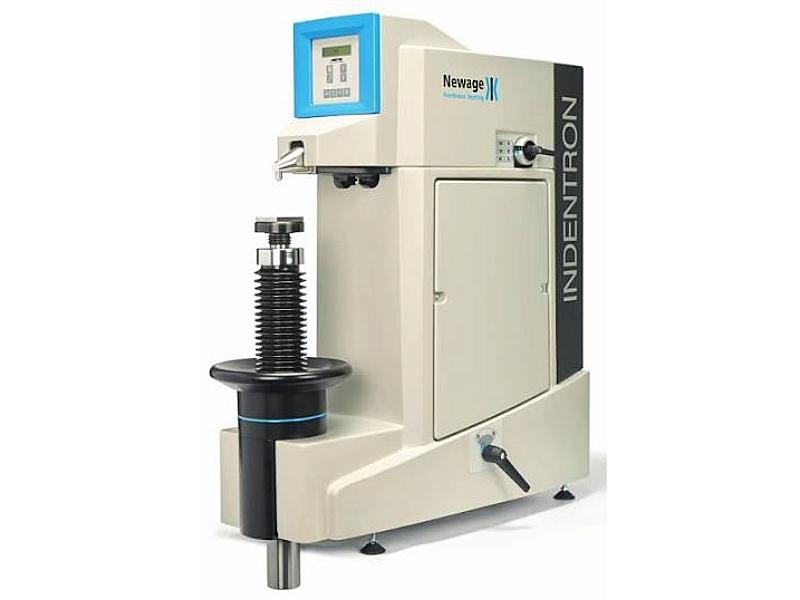
Precision hardness testing equipment from Newage Testing Instruments, acquired by AMETEK in 2008 sell-side M&A deal

Strategic acquisition by AMETEK

AMETEK Inc., listed on the New York Stock Exchange and headquartered in Paoli, Pennsylvania, is a global manufacturer of electronic instruments and electromechanical devices.

The acquisition of Newage strengthened AMETEK's Measurement & Calibration Technologies (M&CT) business — part of its Electronic Instruments Group, which reported sales of approximately US$1.2 billion in 2007.

Newage's hardness testing technology was a direct complement to AMETEK's Lloyd Instruments universal materials testing range, broadening the materials testing solutions AMETEK could offer through its established international sales and service network.

How the deal came together

The market backdrop

By the mid-2000s, the global precision measurement and materials testing sector was consolidating around a small number of listed, acquisitive industrial groups — AMETEK, Roper Technologies, Spectris, and a handful of others — buying specialist independents to extend product range, geographic reach, and aftermarket service revenue.

For owner-managed instrument manufacturers, the strategic question was not whether consolidation would reach them, but on whose terms it would arrive. Newage's owners recognised that running a sale process on their own initiative would produce a materially better outcome than waiting for an inbound approach and negotiating with a single counterparty.

Finding the right acquirer

Mark Sapsford was retained to identify acquirers for whom Newage's hardness testing capability, installed base, and aftermarket service revenue would represent a strategic fit — rather than a financial bolt-on.

The buyer universe was concentrated: listed precision measurement groups with established materials testing platforms, the technical capability to integrate Newage's product range, and the global sales infrastructure to accelerate growth post-completion.

AMETEK's existing Lloyd Instruments business made it a natural candidate. The product complementarity was specific: hardness testing alongside universal materials testing, sold to overlapping industrial, aerospace, and defence customers.

Running a competitive process

The process produced ten credible interested parties and culminated in two firm offers from large multinational acquirers.

The competitive tension generated by running a structured process — rather than negotiating bilaterally with a single inbound approach — increased the headline value materially. Mark led the negotiations through to heads of terms, securing an uplift of approximately 25 per cent over the initial offers.

The structured process also gave the shareholders the data and the leverage to choose the buyer whose strategic rationale, integration plan, and cultural fit best protected the business they had built — rather than the buyer who simply moved first.

Completing the transaction

The transaction completed on 11 February 2008. Newage Testing Instruments was integrated into AMETEK's Measurement & Calibration Technologies division within the Electronic Instruments Group, alongside Lloyd Instruments and AMETEK's broader portfolio of pressure, temperature, position, force, and tension and compression measurement businesses.

Newage's product range continued to trade under its established brand within the AMETEK group, and the existing US and UK sales and service infrastructure was retained and extended through AMETEK's international network.

Enhancing the AMETEK measurement portfolio

The acquisition broadened AMETEK M&CT's materials testing capability into hardness testing across Rockwell, Brinell, Vickers, and microhardness applications — an adjacent but distinct discipline from the universal tensile and compression testing offered by Lloyd Instruments.

The combined platform gave AMETEK a wider answer to materials testing requirements across thin films, small components, micro-structures, and bulk materials, serving industrial, aerospace, defence, and energy customers worldwide.

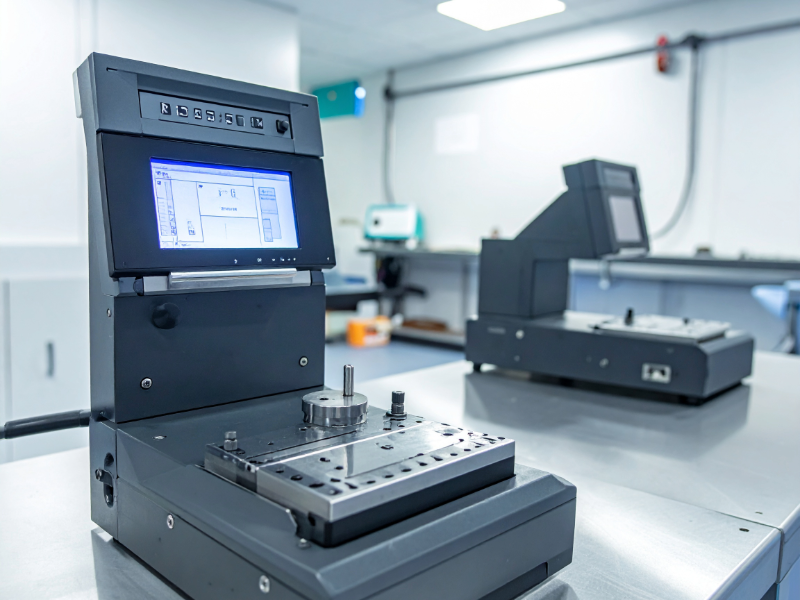
Materials testing equipment used in aerospace and defence, the sectors served by Newage Testing Instruments

M&A advisory support

Mark Sapsford advised the shareholders of Newage Testing Instruments on the sale to AMETEK.

The mandate ran from initial preparation through buyer identification, competitive process management, negotiation, and completion.

"We had two large multinational firms put forward offers. Quite frankly, both offers, as initially received, exceeded our expectations. Mark worked these two and got them to increase their offers by approximately twenty-five per cent."

Douglas McGhee, President — Newage Testing Instruments

Client feedback

"Selling your business is a stressful, complicated process.

"The prospect of continuing operations, while seeking prospective suitors in a clandestine manner, is more than a bit daunting if not overwhelming. 

"Recognising that, my partner and I were fortunate in meeting Mark Sapsford.

"Mark directed a team of M&A pros with aplomb. He not only prepared us to sell, but kept us intimately informed as the process of selling our business progressed.

"Mark made sure that no detail was left to chance. He skilfully assisted me in putting together a presentation for prospects that would pique their interest, and enable them to see the value of the company.

"Mark presented us with 10 capable prospective buyers. He lead the meetings in a comfortable, professional manner. When it was time to tender offers, Mark acted as our negotiator. 

"We [had] two large multinational firms put forth offers. Quite frankly, both offers, as initially received, exceeded our expectations! Mark worked these two and got them to increase their offers by approximately 25%!

"Once we made our decision, Mark reviewed and made suggestions on the sales agreement. 

"At the end of the day, We feel that Mark minimised the disruption of our day-to-day operation, and minimised my partner and my stress levels.

"Additionally, Mark found a great match in the buyer, ensuring the longevity of our company. Equally important, Mark represented our company in a manner that maximized our return!"

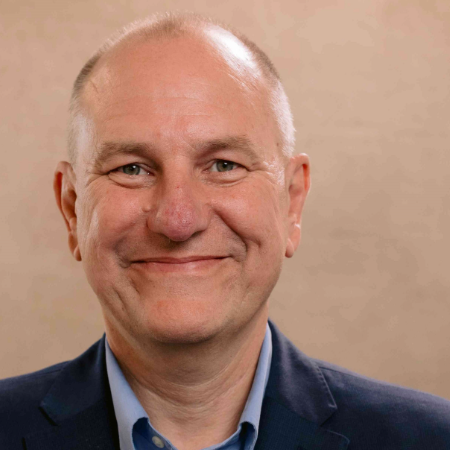
Douglas McGhee, President

Newage Testing Instruments

About Newage Testing Instruments

Newage Testing Instruments was a US-headquartered manufacturer of hardness testing equipment, founded in 1947 and based in Southampton, Pennsylvania.

The company designed and built a comprehensive range of hardness testers — Rockwell, Brinell, Vickers, and microhardness — serving customers in aerospace, defence, oil and gas, and precision manufacturing across more than 30 countries.

Following the 2008 acquisition, Newage operates as part of AMETEK's Measurement & Calibration Technologies division.

About AMETEK

AMETEK Inc. is a New York Stock Exchange-listed global manufacturer of electronic instruments and electromechanical devices, headquartered in Paoli, Pennsylvania.

The Electronic Instruments Group — which absorbed Newage — reported sales of approximately US$1.2 billion in 2007 and operates manufacturing and sales territories across the United States, the United Kingdom, Denmark, and a broader international network serving industrial, aerospace, process, and power markets.

Frequently asked questions

What acquirers value in precision measurement and testing instrument businesses

Strategic acquirers in this sector — listed precision instrument groups such as AMETEK, Spectris, and Roper — typically prioritise four characteristics: a defensible installed base that produces recurring service and consumables revenue, technical capability that complements rather than duplicates existing product lines, an experienced engineering and applications team willing to remain post-completion, and a customer book concentrated in regulated end-markets where switching costs are high. The Newage acquisition by AMETEK met all four: hardness testing complemented Lloyd Instruments' universal materials testing, and Newage's aerospace, defence, and industrial customer base mapped cleanly onto AMETEK's existing distribution.

Valuation in precision instrument M&A is typically an EBITDA multiple basis, with adjustments reflecting the quality of recurring revenue — service contracts, calibration, consumables, and aftermarket spares — alongside one-off equipment sales. Acquirers stress-test the customer concentration, the size and age profile of the installed base, the regulatory accreditations held (ISO 17025 calibration, for example), and any proprietary technology or patents. A sell-side advisor will construct a valuation narrative that surfaces recurring revenue stickiness explicitly, rather than letting buyers anchor on a generic industrial multiple.

Listed precision measurement groups acquire specialist independents to extend product range into adjacent measurement disciplines, accelerate growth in concentrated end-markets, and absorb installed bases that generate predictable aftermarket revenue at high margins. AMETEK's Electronic Instruments Group has been a consistent acquirer over more than two decades, building a measurement portfolio that spans pressure, temperature, position, force, hardness, and tension and compression. The strategic logic for an acquirer like AMETEK is to combine a specialist's technical depth with the listed group's international sales, service, and distribution infrastructure — typically accelerating organic growth post-completion.

A bilateral negotiation with a single inbound buyer rarely produces the maximum defensible valuation. A structured sell-side M&A process introduces competitive tension across multiple credible acquirers, gives the seller real leverage on price and terms, and produces comparable data points that defend the valuation narrative through due diligence. In the Newage transaction, the process generated ten credible interested parties and two firm offers from large multinational acquirers — Mark Sapsford negotiated approximately a twenty-five per cent uplift over the initial offers. That uplift was a direct function of running a process rather than accepting the first approach.

Medium and longer-term challenges for founders in precision manufacturing and industrial instruments

The most useful preparation steps for a precision manufacturing founder are: clarifying the strategic rationale an acquirer will see in the business — technical capability, installed base, regulatory accreditations, or management depth; getting three years of clean, audited financials into a consistent format with recurring revenue surfaced explicitly; documenting key customer relationships, framework contracts, and technical IP so they survive a change of ownership; and beginning to reduce founder-dependency in day-to-day operations. Starting this work 12 to 24 months before a planned exit gives a sell-side advisor the runway to position the business competitively rather than reacting to an inbound approach under time pressure.

Cross-border M&A introduces complexity across legal jurisdiction, tax structure, currency exposure, regulatory consents, and cultural fit between the management teams. The most common risks for industrial sellers are: under-valuing the business because the financial presentation does not translate to the acquirer's home reporting standards; agreeing to deal terms that expose the seller to unfamiliar warranty or indemnity regimes; and accepting an integration plan that erodes the operational culture and key relationships that drove the valuation in the first place. A sell-side advisor with direct cross-border experience can mitigate each of these — and is particularly valuable when the buyer universe is concentrated outside the seller's home jurisdiction.

Confidentiality is one of the most common founder concerns in a UK mid-market sale, and it is operationally manageable when the process is structured correctly. A sell-side advisor controls information flow through staged disclosure — a teaser document with no identifying details, then a full information memorandum under non-disclosure agreement, then management meetings only with shortlisted acquirers. Internal communication is kept tight to a small deal team. Customer-facing communication is reserved for completion or, where strategically necessary, for advance briefings with the most important customer relationships once a preferred acquirer is selected. Done properly, the wider workforce and customer base learn about the transaction only once it has completed.

A structured sell-side process for a UK lower mid-market industrial business typically runs nine to 15 months from initial mandate to completion. Cross-border transactions, or those involving complex due diligence on production assets, IP, regulatory accreditations, or carve-out structures, extend that range. A founder considering a sale in the next two to three years benefits from beginning the preparation conversation well in advance — both to surface the value drivers the market will pay for, and to give the business time to address any founder-dependency, customer concentration, or financial reporting gaps before the formal process starts.

We'd love to hear your story

 Whether you're thinking about a sale now or starting to plan ahead, we can help you get clear on where your business journey is going. Mark Sapsford has advised on 50+ completed transactions across four continents.

Mark Sapsford, Co-founder and Partner at CapEQ, sell-side M&A advisor for UK industrial and precision manufacturing exits