PharmaDeals acquired by IMS Health

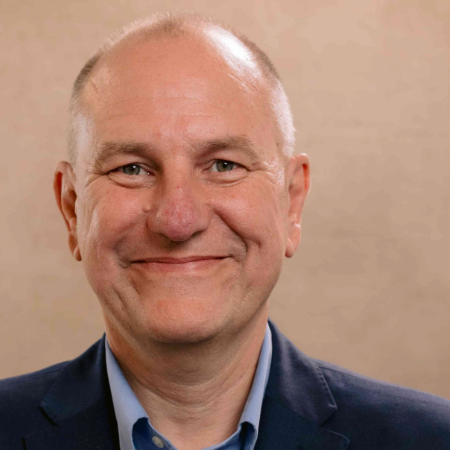
Mark Sapsford advised the shareholders of PharmaVentures Ltd on the sale of its subsidiary PharmaDeals Ltd, the Oxford-based pharmaceutical transaction intelligence database, to IMS Health.

The transaction completed in August 2012 on undisclosed terms.


PharmaVentures logo — Oxford life sciences advisory firm that divested subsidiary PharmaDeals
IMS Health logo — healthcare analytics group that acquired PharmaDeals from PharmaVentures

Deal overview

Mark Sapsford — now a Partner at CapEQ, the Certified B Corporation M&A advisory firm — advised the shareholders of PharmaVentures Ltd on the divestment of PharmaDeals Ltd to IMS Health, the Parsippany-headquartered provider of information, services, and technology to the healthcare industry.

IMS Health announced the acquisition on 14 August 2012. Financial terms were not disclosed.

PharmaDeals was founded in 1996 by Dr Fintan Walton as a publishing and data business within PharmaVentures, the Oxford transaction advisory firm he established in 1992.

Operating from Florey House at the Oxford Science Park, PharmaDeals built a web-based subscription database covering licensing agreements, partnerships, divestments, and mergers and acquisitions across the global pharmaceutical industry.

At the point of sale the database held more than 46,000 transaction records and 16 years of historical data, and was used by pharmaceutical and biotechnology companies, banks, and private equity groups to benchmark deal terms and value partnering opportunities.

Deal at a glance

Target PharmaDeals Ltd
Parent vendor PharmaVentures Ltd, Oxford, United Kingdom
Acquirer IMS Health, Parsippany, New Jersey, United States
Transaction type Subsidiary divestment (carve-out)
Completion date August 2012
Deal value Undisclosed
Deal structure Undisclosed
Sell-side M&A advisor Mark Sapsford Now CapEQ
Sector Information services — pharmaceutical transaction intelligence
UK SIC 2007 J63.12 — Web portals (data and subscription publishing)
Target HQ Florey House, Oxford Science Park, Oxford, United Kingdom
Founded 1996
Founder Dr Fintan Walton
Database at completion 46,000+ transaction records; 16 years of historical data
Customer base Pharmaceutical, biotechnology, medical device and generics companies; investment banks; private equity and venture capital groups
Post-acquisition status Integrated into IMS Health syndicated analytics and insights; IMS Health became QuintilesIMS in 2016 and IQVIA in 2017
Pharmaceutical licensing and M&A transaction records of the type held in the PharmaDeals database

A carve-out, not a whole-company sale

This was a divestment rather than a full exit. PharmaVentures sold the data and publishing asset and retained its core business — advisory work on licensing, partnering, divestments, and M&A across life sciences.

Carve-outs of this kind are structurally harder than a straightforward share sale. The asset being sold shared systems, staff, brand association, and customer relationships with the parent, and each of those dependencies had to be identified, valued, and either transferred or severed before a buyer could complete.

The commercial logic was clear: PharmaDeals was a subscription data business with a very different cost base, growth path, and buyer universe from the consultancy that owned it, and it was worth more inside a global analytics platform than alongside a transaction advisory practice.

How the deal came together 

The market backdrop

Pharmaceutical commercial intelligence was consolidating through 2011 and 2012. Large healthcare information providers were assembling end-to-end analytics suites, buying specialist datasets rather than building them, because the value of a transaction database sits in the depth of its history and that history cannot be recreated at speed.

IMS Health had been taken private in 2010 in a transaction valued at approximately $5.2bn by TPG Capital, the Canada Pension Plan Investment Board, and Leonard Green & Partners, and was actively acquiring — SDI Health, Forcea, Healthcare Data Solutions, and Dateline Software all joined the group in the same period.

For the owner of a specialist dataset with 16 years of accumulated records, that was a favourable moment to come to market, and a narrow one.

Finding the right acquirer

The buyer universe for a pharmaceutical transaction database is small and identifiable: global healthcare information providers, financial data platforms with life sciences coverage, and specialist publishers. Running a broad auction would have exposed a confidential carve-out to competitors of the parent business for no commercial gain.

The approach was targeted instead. The work was to establish which acquirers had a stated analytics strategy that the PharmaDeals dataset would materially advance, and to reach the executives inside those organisations who owned that strategy.

IMS Health's syndicated analytics and competitive intelligence line — company benchmarking, sales force sizing, and therapeutic analysis — was missing a transaction and licensing layer. PharmaDeals supplied it directly.

Running a process that protected value

A carve-out is valued on the quality of what can actually be separated. The process therefore ran in parallel with the separation analysis: which contracts, subscriptions, staff, and systems moved with the asset, and which remained with PharmaVentures.

Competitive tension was established between credible acquirers so that no single buyer could anchor the negotiation at a first offer, and the valuation narrative was built on the characteristics that mattered to a strategic acquirer — subscription revenue, renewal behaviour, the irreplaceability of 16 years of records, and the fit with the buyer's existing product set.

PharmaVentures continued to operate its advisory business normally throughout. Client work was unaffected and the parent's commercial trajectory was sustained.

Completing on the right terms

The transaction completed in August 2012 on undisclosed terms. PharmaDeals moved into IMS Health's syndicated analytics and insights operation, where the database was combined with the group's competitive intelligence capability to support market assessment, forecasting, and lifecycle and portfolio management for healthcare clients.

PharmaVentures retained and reinvested in its core advisory practice. The firm went on to advise on divestments and licensing transactions for Novartis, Transgene, and ESTEVE among others, and subsequently established a London headquarters at One Kingdom Street, Paddington, alongside its continuing Oxford base — the growth trajectory the divestment was intended to fund.

Enhancing the IMS Health analytics suite

IMS Health's syndicated analytics already covered company benchmarking, sales force sizing, and therapeutic analysis.

The PharmaDeals database added the transaction layer: what assets changed hands, on what terms, and at what stage of development.

Combined with real-world evidence held elsewhere in the group, that allowed clients to assess a licensing or partnering opportunity against the full history of comparable deals rather than against anecdote. IMS Health merged with Quintiles in 2016 to form QuintilesIMS, rebranded as IQVIA in 2017.

Anne Delaney, General Manager at IMS Health, said that properly assessing licensing and partnership opportunities requires an understanding of the transaction landscape in the context of real-world evidence, and that bringing those perspectives together supported clients as the industry continued to change.

 Dr Fintan Walton, Chief Executive of PharmaVentures, described the PharmaDeals database as the recognised gold standard for coverage, quality, and depth, and said he was confident that integrating those insights with IMS Health's information and technology assets would open a new set of possibilities for decision-making. 

Pharmaceutical licensing and M&A transaction records of the type held in the PharmaDeals database

M&A advisory support

The shareholders of PharmaVentures were advised on the divestment by Mark Sapsford, now a Partner at CapEQ. Financial terms were not disclosed.

"PharmaDeals was a genuinely rare asset — 16 years of transaction history that no acquirer could have built from scratch.

The work was making sure the right people inside the right organisations understood exactly what that was worth, and that the separation from PharmaVentures was clean enough for a buyer to move quickly."

Mark Sapsford, Partner, CapEQ


About PharmaDeals

Founded in 1996 by Dr Fintan Walton, PharmaDeals operated from Florey House at the Oxford Science Park as the data and publishing arm of PharmaVentures Ltd.

Its web-based subscription database recorded licensing agreements, partnerships, divestments, and mergers and acquisitions across the global pharmaceutical and biotechnology sector, holding more than 46,000 transaction records and 16 years of historical data at the point of sale. Subscribers included pharmaceutical and biotechnology companies, medical device and generics manufacturers, investment banks, and private equity and venture capital groups.

Following the acquisition, PharmaDeals became part of IMS Health's syndicated analytics and insights operation.

About IMS Health

Founded in 1954, IMS Health provided information, services, and technology to the healthcare industry across more than 100 countries.

The business was spun out of Cognizant Corporation in 1998 and taken private in 2010 in a transaction valued at approximately $5.2bn by TPG Capital, the Canada Pension Plan Investment Board, and Leonard Green & Partners.

Acquisitions in the following years included Cambridge Pharma Consultancy, PharMetrics, SDI Health, Forcea, Healthcare Data Solutions, and PharmaDeals. IMS Health merged with Quintiles in 2016 to form QuintilesIMS, rebranded as IQVIA in 2017.

Frequently Asked Questions


What acquirers value in pharmaceutical data and information services businesses

Acquirers of pharmaceutical and life sciences data assets underwrite three things: the depth of the historical record, the renewal behaviour of the subscriber base, and how directly the dataset plugs into an existing analytics product. Historical depth is the hardest of the three to replicate — a database holding 16 years of licensing and M&A records cannot be rebuilt at speed, and that irreplaceability is what converts a data business from a revenue line into a strategic asset. Low subscriber concentration and predictable renewals reduce perceived risk and support a stronger multiple. In the PharmaDeals transaction, IMS Health was buying a transaction and licensing layer that its competitive intelligence suite did not otherwise have.

Subscription data businesses are usually valued on a multiple of annual recurring revenue rather than EBITDA, adjusted for renewal rate, revenue concentration, gross margin, and the cost of maintaining the dataset. Where the underlying data is proprietary and accumulates over time, a scarcity premium sits on top of the revenue multiple, because the acquirer is buying a position that cannot be competed away quickly. A generalist advisor working from an EBITDA benchmark will typically understate this. A competitive sell-side process run by an M&A advisor with sector fluency is the most reliable way to establish a defensible valuation and prevent a first offer from anchoring the negotiation.

Buy rather than build is the default in commercial intelligence, because a dataset's value is a function of how long it has been collected and that is the one input capital cannot accelerate. UK specialist data businesses are attractive to US and European healthcare analytics groups for practical reasons as well: English-language records that travel into export markets, proximity to the Oxford, Cambridge, and London life sciences clusters where much of the deal flow originates, and valuations that are frequently more attractive than equivalent US assets. IMS Health acquired several specialist datasets in the years around 2012, including SDI Health, Forcea, and Healthcare Data Solutions, as part of exactly this strategy.

In a carve-out, an acquirer is underwriting separability as much as performance. They will test which customer contracts transfer cleanly, which staff move with the asset, what shared systems and premises have to be replicated, and how long any transitional services arrangement with the vendor needs to run. Every dependency left unresolved at heads of terms becomes a price adjustment or an indemnity later. Vendors who map the separation before going to market — rather than discovering it during due diligence — hold the valuation they opened with. This was the central piece of preparation in the sale of PharmaDeals out of PharmaVentures.

Founder challenges: selling a UK life sciences or data business

Confidentiality discipline matters more in a divestment than in a whole-company sale, because the vendor still has to trade afterwards. A targeted process approaching a small, verified group of strategic acquirers exposes far less than a broad auction, and staged disclosure keeps commercially sensitive information about the retained business out of the data room entirely. Internally, the practical constraint is management time: the same people usually run both the asset being sold and the business being kept. An advisor who absorbs buyer communication, coordinates the legal and financial workstreams, and holds the timetable protects the trading performance that the valuation depends on.

Timing in life sciences is driven by the acquirer's cycle as much as the founder's. Consolidation in commercial intelligence, diagnostics, and services runs in waves, and the window in which several well-capitalised buyers are competing for the same category is usually two to three years wide. Selling into that window with a management team able to operate without the founder on every call produces a materially different outcome from selling after it closes. On the business side, the readiness tests are consistent recurring revenue, documented IP and data ownership, and clean contract assignment provisions. Founders who wait until growth has plateaued or until they are worn out by the business tend to realise less.

Three recur across the Oxford, Cambridge, and Golden Triangle clusters. The first is key-person dependency: businesses built around a founder's scientific or commercial reputation carry a discount until the client and subscriber relationships demonstrably sit with the organisation. The second is IP and data provenance — where a business has grown through university collaboration, grant funding, or licensed inputs, acquirers will test ownership line by line, and unresolved chain-of-title issues surface at the worst moment in due diligence. The third is buyer concentration: the credible acquirer universe for a specialist life sciences asset is often fewer than a dozen organisations worldwide, most of them overseas, which makes the quality of the advisor's access to those specific buyers more consequential than the size of their general network.

Three tests separate advisors in this category. First, valuation fluency: can they build and defend a case based on recurring revenue, data scarcity, and IP rather than defaulting to an EBITDA multiple. Second, named buyer access: ask which specific acquirers they have transacted with in your sub-sector, not how many deals they have completed overall. Third, independence — an advisor without audit, tax, or other service line relationships with the same counterparties has no competing interest in where the deal lands. CapEQ is a Certified B Corporation, independently assessed against standards that include putting client outcomes ahead of deal income, and is a dedicated sell-side M&A boutique for UK founder-led businesses in the £5m–£100m revenue range.

We'd love to hear your story

Let's chat about your future plans. We can help you get clear on where you and your business are going.

Mark Sapsford of CapEQ, available for an informal conversation about a founder exit