EcuTek acquired by AMEI Holdings, backed by Promus Equity

On 22 December 2017, AMEI Holdings, Inc. — the Promus Equity-backed parent company of Auto Meter, Stack, and COBB Tuning — acquired UK performance ECU tuning specialist EcuTek Technologies, adding a fourth brand to its global automotive performance portfolio.

The transaction brought EcuTek’s pioneering Electronic Control Unit (ECU) tuning software and twenty years of Original Equipment Manufacturer (OEM) relationships into a US-led group already covering performance instrumentation, motorsport data logging, and aftermarket tuning. EcuTek joined Auto Meter, Stack, and COBB Tuning under the leadership of AMEI Holdings CEO Jeff King.


Ecutek Technologies logo - UK performance car tuning manufacturer acquired by AMEI Holdings Inc
Promus Equity Partners logo - Chicago private investment firm and AMEI Holdings  owner since 2013
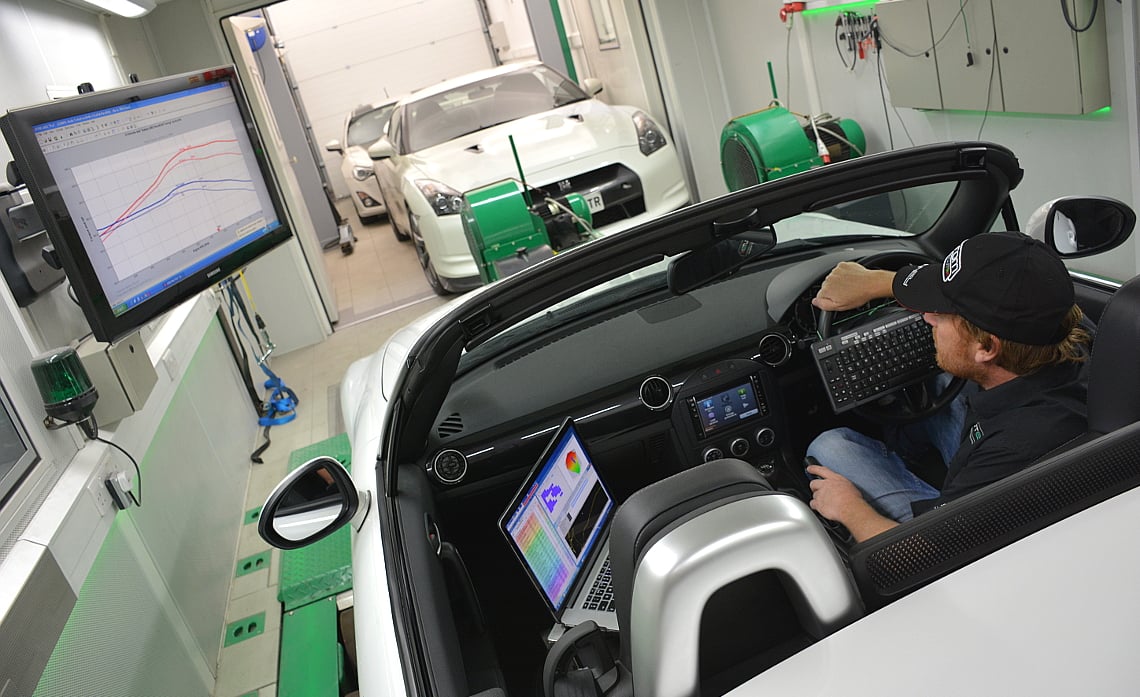
EcuTek Flash2002 software in use on a Subaru Impreza performance build — ECU tuning M&A deal advised by James Pugh

Deal at a glance

Target EcuTek Technologies Ltd
Acquirer AMEI Holdings, Inc. (parent of Auto Meter, Stack, and COBB Tuning)
Acquiring entity Engineered Performance Technologies of Illinois (Auto Meter subsidiary)
Acquirer ownership Promus Equity Partners (since June 2013)
Acquirer CEO Jeff King — leads AMEI Holdings and all four brands
Completion date 22 December 2017
Deal value Undisclosed
Deal structure Undisclosed
Sell-side M&A advisor James Pugh
Sector Automotive performance software / ECU tuning / Aftermarket automotive technology
Target HQ West London, United Kingdom
Co-founders Merv Carroll, Steve Done
Founding milestone 1999 — unlocked the Subaru Impreza ECU
Flagship product Flash2002 ECU tuning software
Notable OEM relationships Subaru, Mazda, Nissan, Mitsubishi, Prodrive, Great Wall

Overview

EcuTek Technologies, the West London-based engine electronics specialist behind some of the most widely used ECU tuning software in the world, was acquired on 22 December 2017 by AMEI Holdings, Inc., the Promus Equity-backed parent of Auto Meter, Stack, and COBB Tuning.

For co-founders Merv Carroll and Steve Done, the transaction marked the conclusion of a 20-year build — from cracking the Subaru Impreza ECU in 1999, through the global success of the Flash2002 software platform, to becoming the trusted tuning partner of major OEMs including Subaru, Nissan, Mazda, Mitsubishi, and Prodrive.

James Pugh advised the shareholders of EcuTek on the sale, leading a competitive process that produced terms reflecting the company’s strategic value, intellectual property, and OEM-grade engineering reputation.

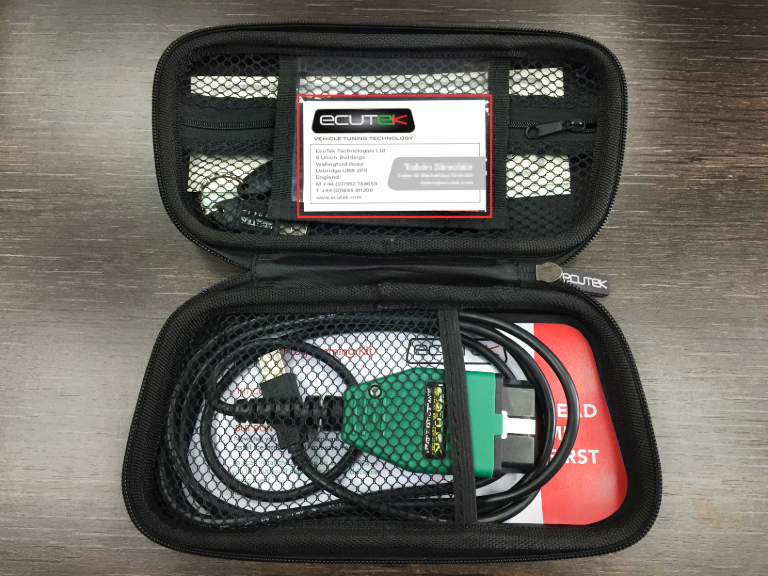
EcuTek ECU tuning kit to illustrate company sale to AMEI Holdings, backed by Promus Equity

About EcuTek Technologies

EcuTek began in West London in the late 1990s and grew, over two decades, into one of the most respected names in automotive performance software. The company’s engineering reputation rests on a discipline that is rare in the aftermarket: unlocking factory-protected ECUs to allow precise tuning of boost, ignition timing, fuelling, and other performance parameters, while preserving every manufacturer fail-safe.

That technical rigour earned trust from OEMs including Subaru, Mazda, Nissan, and Mitsubishi, and from major motorsport engineering firms such as Prodrive — a level of credibility that few aftermarket businesses ever achieve. By the time of the AMEI Holdings transaction, EcuTek software was supporting tuning on cars ranging from the Subaru Impreza WRX and Mitsubishi Evolution to the Nissan GT-R and Mazda MX-5, with dealer networks active across the UK, Europe, North America, and Asia-Pacific.


From Cosworth to Subaru: the origin story

Merv Carroll, EcuTek’s technical co-founder, began his career at Power Engineering in 1995, mapping engines for the wave of high-performance Cosworth-badged vehicles that defined the era. As demand for Cosworth tuning waned, Merv pivoted to the new generation of high-performance Japanese cars — Mitsubishi Evos, Toyota MR2s and Supras, Nissan Skylines, and Subaru Imprezas — quietly building the engineering depth that would later make him impossible to compete with.

In 1999, Steve Done walked into the workshop. A senior internet designer at Cable & Wireless with a deep technical curiosity and a UK-spec Subaru Impreza he had already heavily modified, Steve wanted to take the ECU one step further. The problem was simple to state and almost impossible to solve: at the time, no one in the industry knew how. Rumours circulated about a Japanese company having cracked it, but, as Merv later put it, the reality was “smoke and mirrors.”

So Merv and Steve decided to crack it themselves. Merv supplied the engine knowledge; Steve, drawing on his Cable & Wireless background in electronics and code, took on the reverse engineering. Six months and fifteen blown ECUs later, the Subaru Impreza ECU was open — every control parameter, every fuel map, every timing setting, accessible and adjustable for the first time outside the factory

Building EcuTek: from breakthrough to global brand

The Subaru tuning industry changed overnight. Where previous solutions had been either expensive standalone ECUs or crude piggyback boxes, Merv and Steve’s approach worked with the factory ECU itself — cheaper, more sophisticated, and safer. Serial automotive entrepreneur David Power, founder of Power Engineering and Powerflex, joined the venture to commercialise it, and EcuTek was born.

EcuTek built its reputation carefully — selecting only the best tuners to join its dealer network, building owner awareness through the Scoobynet enthusiast forum, and never compromising on engineering quality. When the next-generation Subaru Impreza launched on a completely different Denso ECU architecture, the team rebuilt the platform from scratch and unveiled Flash2002 at the Specialty Equipment Market Association (SEMA) show — timed to land just as the US-market WRX arrived in showrooms. The launch catapulted EcuTek into the upper tier of global tuning brands.

Soon, the same chip-solution vendors EcuTek had once installed parts from — Jun, Cusco, HKS, Blitz — were buying software from EcuTek instead. Prodrive licensed the tools for its Prodrive Performance Pack dealer upgrades. Nissan’s Skyline GT-R ECU, considered uncrackable by many, was opened in three hours; Subaru’s drive-by-wire protocols took six months. In 2005, the company moved to a purpose-built technical centre with an in-house dyno cell, a full workshop, and an engineering team of around thirteen.

EcuTek’s OEM-grade work eventually led to direct manufacturer engagements, including being flown to China to refine factory maps with the chief engineers at Great Wall Motors — a moment Merv has described as a career highlight. Mitsubishi’s Britcar entry, the Evolution FQ road-car range, and Ken Block’s early gymkhana Subaru all ran on EcuTek software.

About AMEI Holdings

AMEI Holdings, Inc. is the parent company of a portfolio of automotive performance and motorsport technology brands, owned since June 2013 by Chicago-based Promus Equity Partners. Ahead of the EcuTek transaction, AMEI Holdings already owned three established brands, each operating in a distinct performance niche:

  • Auto Meter Products, Inc. — the long-established US instrumentation manufacturer headquartered in Sycamore, Illinois, producing performance gauges, diagnostic equipment, and tuning solutions for automotive, marine, and motorsport applications.
  • Stack Ltd. — the UK motorsport instrumentation specialist, acquired by AMEI Holdings as a subsidiary of Auto Meter in 2007, world-leading in tachometers, data logging, video logging, and tyre pressure monitoring systems for Formula 1, World Rally, and prototype sportscar racing.
  • COBB Tuning, Inc. — the Texas-headquartered aftermarket tuning specialist, acquired in 2014 with support from Promus Equity Partners and Avante Mezzanine Partners.

EcuTek joined AMEI Holdings as the fourth brand on 22 December 2017 — extending the group’s capability into pioneering ECU tuning software, deep UK and European engineering, and direct OEM relationships across the Japanese and European performance car landscape.

All four brands sit under the leadership of CEO Jeff King, an experienced automotive executive whose track record before AMEI included leading the $100 million Kohlberg-backed management buy-out (MBO) of Holley Performance Products and overseeing approximately $150 million of follow-on acquisitions ahead of Holley’s 2021 Initial Public Offering (IPO).

Strategic rationale for the acquisition

For AMEI Holdings, EcuTek closed a clear gap in the group’s portfolio. Auto Meter dominated US instrumentation; Stack led motorsport data and display systems on both sides of the Atlantic; COBB Tuning held a strong position in the US tuning aftermarket. What AMEI lacked was a globally-recognised software platform for tuning factory ECUs, and an established presence in the European OEM and motorsport supply chain. EcuTek delivered both in a single transaction.

The strategic logic also extended to the future of automotive performance. As internal combustion gives way to hybrid and electric powertrains, the engineering disciplines that built EcuTek — reverse engineering, calibration, safe modification of factory electronics — transfer directly to battery management, motor controllers, and software-defined vehicle systems. Adding that capability to a Promus Equity-backed platform with a stated buy-and-build mandate positioned AMEI to lead in the next generation of performance technology, not just the current one.

For EcuTek’s shareholders, joining a well-capitalised group with three sister brands meant continued investment in research and development, access to North American distribution through Auto Meter’s established channel, and a credible long-term home for a business they had built over twenty years.

Ecutek-Technologies-ECU-tuning-kit-acquired-in-autotech-rollup


How the deal came together

EcuTek co-founders Merv Carroll and Steve Done worked with James Pugh as their M&A advisor to lead a structured process to find the right strategic partner.

Twenty years of building EcuTek meant the decision was never going to be purely financial — it needed a careful read of the global automotive aftermarket and a clear-eyed view of who could be trusted with the business they had built.

1. The market backdrop

The global automotive aftermarket was consolidating, with private equity-backed platforms in the US actively assembling diversified performance groups. Promus Equity’s ownership of AMEI — with Auto Meter, Stack, and COBB Tuning already in place, and Jeff King driving a clearly articulated buy-and-build mandate — was one of the standout examples. UK and European engineering depth, particularly anything OEM-adjacent, was at a premium. EcuTek sat squarely in that sweet spot.

2. Finding the right acquirer

The mandate was to identify acquirers for whom EcuTek’s software intellectual property, OEM trust, and motorsport pedigree would be a strategic asset, rather than a financial bolt-on. AMEI Holdings stood out for three reasons: the existing portfolio (Auto Meter, Stack, COBB Tuning) created an obvious place for EcuTek to sit; Jeff King’s leadership team had the sector experience to integrate and grow the business; and Promus Equity’s financial backing made follow-on investment credible rather than aspirational.

3. A competitive process

The field — several credible strategic and financial parties engaged with the opportunity, drawn by EcuTek’s software IP, OEM relationships, and customer base spanning the UK, Europe, North America, and Asia-Pacific.

The founders’ criteria — the decision was shaped as much by fit, continuity, and the acquirer’s vision for the business as by price; trust in the leadership team mattered.

Why AMEI won — a clearly articulated strategic rationale (closing the software gap in a portfolio already covering instrumentation, motorsport data, and tuning); Jeff King’s sector credibility; and the financial discipline of a private equity-backed parent with a track record of completed acquisitions.

4. Completing before year-end

The transaction completed on 22 December 2017 — deliberately landing inside the calendar year despite the natural slowdown of the late-December period in M&A. Closing before year-end gave the founders a clean transition, allowed AMEI to integrate EcuTek into its 2018 plan from day one, and reflected the disciplined process management that had run throughout the engagement.

  • The outcome — a competitive process produced terms that reflected EcuTek’s strategic value, validating the founders’ decision to run a thorough process rather than respond to an inbound approach.


Founder feedback

From Steve Done, co-founder — EcuTek Technologies
“He really got what we did”

“James was instrumental in achieving the very best offer for the business, as well as driving the sale through to a successful conclusion. He took the time to understand our business and really got what we did.”

“Confidently sold the business on its merits”

“When it came to meeting potential acquirers, he was then able to confidently sell the business on its merits. James is super-intelligent, driven, focused, remembers everything you say, and takes time to understand what you are conveying.”

“A unique experience — to watch and listen”

“It was a unique experience for us — my business partner and I — to have industry professionals ask in-depth questions about our business, then sit by and watch as someone else articulately answered them with accuracy and confidence.”

“Overstepped his remit wherever required”
“James was able to very competently discuss technical, financial, and legal issues with each of the various experts involved in the deal. He overstepped his remit wherever required to pick up tricky loose ends that others had avoided or missed.”  

Why having an M&A advisor was crucial: Steve Done’s experience selling Ecutek

Steve Done, former co-owner, shares his experience of selling Ecutek with the help of James Pugh.

Reflecting on the process, Steve explains that he would never have considered going through it without expert guidance.

Having someone like James Pugh by his side ensured they could create healthy competition among potential buyers, significantly boosting the sale value. Steve highlights the importance of having someone who speaks the language of M&A and understands complex financial details — areas where he wasn’t experienced.

Though the process was intense, particularly the due diligence, Steve emphasises the importance of teamwork and communication.

He also shares a valuable lesson: in future deals, he would ask the buyer to appoint a single point of contact to avoid being overwhelmed by repetitive requests. 


 ▶️ Watch the full interview series: How I sold my business — EcuTek founder Steve Done. 

Results


20+
years of Ecutek engineering heritage at acquisition
4
Ecutek completes four aftermarket brands in Promus Equity's AMEI holding company.
5+
major OEM and motorsport relationships supported at completion (Subaru, Nissan, Mazda, Mitsubishi, Prodrive, Great Wall).
19
skilled Ecutek roles safeguarded. Fifteen are still there today.

Advisor team

Sell-side M&A advisor: James Pugh 

James Pugh — who advised EcuTek’s shareholders on the sale to AMEI Holdings in 2017 — now leads CapEQ’s automotive M&A practice.

James specialises in helping UK and cross-border technology founders run structured sale processes, with particular experience in performance engineering, software-led businesses, and OEM-adjacent technical companies.

More automotive technology M&A:


james-pugh-cta

Frequently asked questions

What makes a UK ECU tuning or automotive software business attractive to strategic acquirers?

Strategic acquirers in the automotive aftermarket sector typically focus on a small number of value drivers when evaluating a UK ECU tuning, calibration, or performance software target. Software intellectual property and the depth of engineering capability sit at the top of the list — particularly where the business holds long-standing Original Equipment Manufacturer (OEM) relationships that are difficult to replicate.

Recurring revenue from licensed software, the quality of the dealer or tuner network, and the breadth of supported vehicle platforms also matter materially. For platform acquirers building a global performance aftermarket group, a UK target with credible OEM trust and a defensible technical position is often worth a clear strategic premium.

How do private equity-backed automotive platforms value performance software companies?

Private equity-backed automotive platforms generally value performance software businesses on a blend of profitability and growth, typically expressed as a multiple of earnings before interest, taxes, depreciation, and amortisation (EBITDA), adjusted for the quality and recurrence of revenue. Where a business has software licence revenue, the analysis often shifts toward Annual Recurring Revenue (ARR) and gross margin.

Strategic value drivers — OEM relationships, technical IP, brand strength in tuner communities, and readiness for the electric vehicle transition — are typically reflected in the multiple applied rather than the headline metric. Running a competitive process with an experienced UK M&A advisor is the most reliable way to surface that strategic value rather than accept a first offer that anchors on financials alone.

Why do US automotive aftermarket groups target UK and European specialist tuning businesses?

The UK and continental Europe are home to a concentration of high-quality automotive engineering talent, motorsport heritage, and OEM-adjacent technical capability that is hard to find at the same depth in North America. US automotive aftermarket platforms — particularly those backed by private equity with a buy-and-build mandate — acquire UK and European specialists to access engineering depth, established OEM relationships, and credibility in performance and motorsport communities.

The pound’s exchange rate dynamics, combined with the UK’s open M&A market, also make British engineering businesses attractive cross-border targets. For AMEI Holdings, EcuTek extended a portfolio that already spanned US instrumentation (Auto Meter), UK motorsport data (Stack), and US tuning (COBB Tuning) — closing the software gap and deepening the group’s European engineering reach.

What does an automotive software M&A buyer focus on in due diligence?

Automotive software M&A due diligence typically focuses on five areas. First, intellectual property: software ownership, code quality, third-party library exposure, and the strength of trademarks and patents. Second, OEM relationships: contractual terms, exclusivity, and the practical risks of an OEM withdrawing support.

Third, the customer and dealer base: concentration, churn, and contractual stickiness. Fourth, regulatory and emissions compliance, particularly where tuning interacts with vehicle homologation. Fifth, the readiness of the technology stack for the electric and hybrid vehicle transition. A well-prepared seller anticipates these questions and assembles the supporting documentation in advance — work that an experienced UK M&A advisor will lead as part of process preparation.

What are the longer-term challenges for UK automotive technology founders considering an exit?

UK automotive technology founders face a particular set of medium-to-longer-term challenges when planning an exit. The transition from internal combustion to electric and hybrid powertrains is reshaping the addressable market, with established engine-tuning revenue streams under pressure and new opportunities emerging in battery management, motor calibration, and software-defined vehicle architecture.

Concentration risk — dependency on a small number of OEM relationships or vehicle platforms — is a recurring diligence concern. Talent retention, particularly of senior engineers with deep platform knowledge, is critical: founders preparing for sale need to reduce the business’s dependency on any single individual, including themselves. The earlier this work begins, ideally 12 to 24 months before a planned process, the stronger the eventual exit valuation.

How are UK automotive tech businesses adapting to the electric and hybrid vehicle transition?

The UK’s 2035 phase-out date for new petrol and diesel vehicle sales is reshaping investment priorities across the automotive technology supply chain. The most resilient UK automotive software businesses are extending their engineering capability from internal combustion ECU tuning into adjacent areas: battery management systems, electric motor controller calibration, regenerative braking optimisation, and over-the-air software update infrastructure.

For founders, the challenge is to demonstrate that the company’s core engineering DNA — understanding how to extract performance from vehicle electronics while maintaining safety margins — transfers cleanly to the new powertrain landscape. Acquirers will pay a clear premium for businesses that have evidenced that transition in product roadmap, customer engagements, and revenue.

When should an automotive software founder start planning their exit?

The best-prepared automotive software founders begin planning their exit two to three years before a formal sale process. That window allows time to clean up financial reporting, document software IP and OEM relationships, build a leadership team that can operate without the founder, and shape the business toward the strategic rationale that will most resonate with target acquirers.

It also gives founders the time to clarify what they want personally from the transaction — a complete exit, an ongoing earn-out, a continuing role, or a phased handover. Founders who only begin planning when an inbound approach lands, or when their energy for the business has run out, typically achieve lower valuations and less control over the outcome. At CapEQ, we work with UK and cross-border automotive technology founders from initial conversation through to completion, with a partner-led approach throughout.

What happens to staff, customers, and intellectual property after an automotive software acquisition?

In most automotive software acquisitions by strategic or private equity-backed platforms, the acquirer’s objective is to preserve the operational engine that created the value in the first place. Staff continuity is typically prioritised, particularly for senior engineers, customer-facing personnel, and product leadership; OEM and dealer relationships are protected by maintaining a recognisable brand and account team; and intellectual property is consolidated under the new ownership structure but kept in active development.

For EcuTek, joining AMEI Holdings under Promus Equity’s ownership meant taking a place alongside Auto Meter, Stack, and COBB Tuning — with the continued investment, North American distribution, and group resources that a four-brand performance platform can provide. Where founders care about legacy, choosing an acquirer whose values and operating model align with their own is often as important as the financial terms of the deal.

We'd love to hear your story

Let's chat about your future plans. We can help you get clear on where your business journey is going. 

james-pugh-cta