Capital GES acquired by People 2.0 

In 2019, Switzerland-based international employment specialist Capital GES merged with Pennsylvania-headquartered workforce deployment platform People 2.0 Global.

Mark Sapsford led sell-side M&A advisory for the Capital GES shareholders.

EOR specialist Capital GES was acquired by People 2.0
People 2.0 acquired EOR specialist Capital GES in 2019

Deal at a glance

Target Capital GES
Acquirer People 2.0 Global
Completion year 2019
Deal value Undisclosed
Deal structure Strategic merger forming a combined global platform
Sell-side M&A advisor CapEQ — Partner Mark Sapsford
Sector Global workforce deployment — Employer of Record (EOR), Agent of Record (AOR), and international Professional Employer Organisation (PEO)
Target HQ Geneva, Switzerland
Capital GES geographic reach 30+ countries across Europe, Latin America, Asia, and Africa
Years in market at exit 25+
Acquirer HQ King of Prussia, Pennsylvania, USA

Overview

People 2.0 Global is a US-headquartered provider of technology-enabled workforce deployment across North America. In 2019, it merged with Capital GES to form a global workforce deployment platform. The combined entity went on to serve more than 2,000 clients and manage over 20,000 workers across five continents.

Mark Sapsford led negotiations on behalf of the Capital GES shareholders, supported by complex legal advisory from Evershed Sutherlands.

About Capital GES

Capital GES is a Swiss international employment specialist with more than 25 years of operating history. It provides Employer of Record (EOR), international Professional Employer Organisation (PEO), and Agent of Record (AOR) services to global staffing companies, independent contractors, and employment intermediaries.

At the time of sale, Capital GES operated across 30 countries — with regional hubs in Switzerland and Brazil and additional offices in the United States and Ireland. Its client base spanned global staffing firms deploying contingent talent into complex regulatory environments across Europe, Latin America, Asia, and Africa.

About People 2.0 Global

People 2.0 Global is a US-headquartered platform providing technology-enabled workforce deployment and outsourced back-office services for employment intermediaries. Earlier in 2019, the business partnered with New York-based private equity firm CIP Capital.

The Capital GES merger was the first deal in a buy-and-build strategy that would later see TPG acquire a majority stake from CIP Capital in 2021.

By 2024, the People 2.0 group had completed seven international acquisitions: Wepaypeople (Netherlands), TCP Solutions (UK), Capital GES (Switzerland), Talentwave (US), BOTH (UAE), Brookson (UK), and Husys (UK).


How the deal came together


Market consolidation

Capital GES had built a 25-year position in international employment — a sector being reshaped by accelerating demand for compliant cross-border hiring. Its scarcity value was clear: regulated infrastructure across 30 countries, deep labour-law expertise, and a long-tenured client base of global staffing intermediaries.

People 2.0, newly partnered with CIP Capital, had identified global expansion as a core strategic priority. Capital GES offered the geographic footprint, regulatory depth, and client relationships to deliver that step-change in a single transaction.

The shareholder question

For the Capital GES shareholders, the choice was neither simple nor purely financial. They had built a market-leading specialist with strong cultural foundations. The next phase of growth would demand significant capital and platform investment.

Any acceptable offer therefore had to (a) recognise the value of two and a half decades of compounding regulatory know-how, (b) preserve the operating culture that had attracted and retained clients, and (c) give the founders confidence in the partner taking the business forward.

Negotiation and deal structure

CapEQ Partner Mark Sapsford led the negotiation — pressure-testing offers, structure, and post-deal terms while keeping competitive tension live throughout the process.

Cultural fit between the two businesses proved as important as commercial fit. Both shared a commitment to high-touch service and rigorous compliance. The transaction was structured to combine People 2.0's scalable North American infrastructure with Capital GES's international reach — positioning the merged platform as a premier global workforce deployment provider.

Due diligence

Due diligence reflected the complexity of an international employment business operating across 30 jurisdictions. Workstreams included:

  • Multi-jurisdiction labour-law and compliance review
  • Tax structuring across Switzerland, Brazil, the United States, and Ireland
  • Client contract assurance and revenue concentration analysis
  • IP and platform architecture review
  • Cultural and operating model alignment

Acquirer view 

"The merger with Capital GES accomplishes a key strategic priority for People 2.0 by providing our valued clients with the ability to deploy workers globally through our platform. Capital GES's deep expertise in complex labour laws in international markets, coupled with its longstanding global client base, allows People 2.0 to realise its vision to become the leading independent global workforce deployment platform."

Charles Miller and Erik Vonk, Co-CEOs, People 2.0 Global


Target view

"Given its scalable infrastructure and market-leading position in North America, we feel People 2.0 is the perfect partner to enable Capital GES to enhance its service offering to our clients and expand into new markets. Both companies share a very similar culture and vision: to provide talent acquisition managers and workforce deployment specialists with end-to-end global solutions while maintaining consistently high levels of service and compliance."

Brian Walters, CEO, Capital GES

Results


2000+
Combined client base post-merger
20000+
Workers managed across the platform
5
Continents served
30+
Countries in the Capital GES network.
25+
Years of trading at exit

Founder lessons from Brian Walters

Brian Walters reflected on the sale of Capital GES across a CapEQ video series — How I Sold My Business.

The series explores valuation, scaling, hiring, and the founder mindset shifts an M&A process demands. Recurring themes include:

  • Hire for mindset, not credentials. Brian shifted from prioritising degrees to prioritising character fit and cultural alignment — a lesson he credits with shaping the team that made Capital GES acquirable.
  • Valuation is built years before the deal. The compounding of compliant, multi-country infrastructure created scarcity value an opportunistic buyer could not replicate.
  • Cultural fit underwrites deal certainty. Shared service standards and compliance philosophy gave both sides confidence that integration risk was manageable.

Frequently asked questions

Acquirer priorities in workforce M&A

What do acquirers value most in Employer of Record and global workforce businesses?

Buyers in workforce M&A pay premiums for compliant infrastructure that is hard to replicate: licensed entities across multiple jurisdictions, a clean track record on labour-law compliance, recurring revenue from intermediary clients, and platform technology that scales without proportionate headcount. Geographic reach combined with regulatory depth is the pairing that drives the highest multiples in international staffing M&A.

How is a global staffing or AOR company typically valued in M&A?

Mid-market global staffing, AOR, and EOR businesses are usually valued on a multiple of EBITDA — adjusted for client concentration, currency exposure, and contractor versus employed-worker mix. Recurring revenue retention, gross margin stability, and the share of revenue earned in regulated jurisdictions all materially influence the multiple a strategic acquirer will defend at the negotiating table.

Why do consolidators target multi-jurisdiction employment businesses?

Consolidators — typically PE-backed buy-and-build platforms like People 2.0 — pursue cross-border employment businesses because each acquisition delivers immediate geographic capability, regulatory licensing, and cross-sell into existing client books. Buying compliant infrastructure is faster, cheaper, and lower-risk than building it organically across 20 to 30 jurisdictions.

What due diligence focus areas are unique to international employment M&A?

Due diligence on EOR, AOR, and international PEO businesses concentrates on multi-jurisdiction labour-law compliance, permanent-establishment and corporate tax exposure, contractor-classification risk, data-privacy regimes (including GDPR), and the integrity of payroll and remittance flows. Buyers also stress-test client contract change-of-control clauses, since consolidator acquisitions can trigger renegotiation.

Founder challenges: sector and geography

What are the long-term challenges of running a Swiss-headquartered, cross-border employment business?

Switzerland offers stability, neutrality, and a strong professional services ecosystem. Founders nonetheless carry real complexity: non-EU regulatory positioning, multi-currency operations, and the need to maintain entities and licensing in every country served. Over time, the cost of maintaining compliance scales faster than revenue unless the platform is engineered for it from the outset.

How does evolving labour-law complexity in 30+ countries affect a founder’s exit timing?

Labour-law reform is constant — IR35 in the UK, the EU Platform Work Directive, US contractor reclassification, and ongoing regulatory tightening in Latin America. Founders who exit during a stable regulatory window typically secure cleaner valuations than those who go to market mid-reform, when buyers price in compliance retrofit costs. Timing the exit window is itself a strategic decision worth advising on years in advance.

What succession options exist for founder-led international staffing groups?

Founders typically choose between four routes: a strategic exit to a consolidator (the Capital GES route); a private equity recapitalisation that releases capital while retaining a stake; a management buyout where existing leaders take ownership; or a phased succession to family or internal successors. The right path depends on personal goals, capital needs, and the founder’s appetite for continued involvement after completion.

How do FX, regulation, and political risk shape exit planning for cross-border services businesses?

Cross-border services founders face exposure to currency volatility, sanctions regimes, and shifting tax-treaty positions — each of which can move enterprise value materially in the run-up to a sale. Sophisticated sell-side advisors model these scenarios in advance, hedge what can be hedged, and structure consideration to insulate the headline price from short-term geopolitical noise.

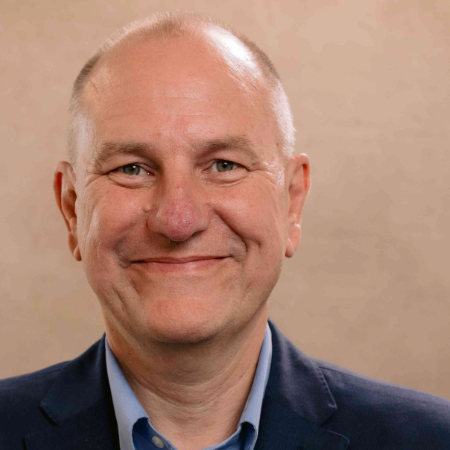
Mark Sapsford negotiating the sale of Capital GES to People 2.0 Global

Advisor team

Sell-side M&A advisor: Partner Mark Sapsford. (pictured).

Sell-side Legal Advisor: Eversheds Sutherland led by Marc Nufer (Corporate/M&A), Alexander Schütz, Philip Letsch (both Corporate/M&A), Nathalie Urban (Tax) and Sarah Leutwiler (HR). .

Client feedback

"Mark is conscientious, straightforward, honest, empathetic, and patient. Having worked with him on two complex multinational M&A deals I have come to respect him for his knowledge and experience, and also for his measured but firm approach to negotiations."

Brian Walters, CEO, Capital GES

Crossborder expertise for founder exits

Mark Sapsford has personally led more than 50 completed M&A transactions across the UK, Ireland, the United States, the Netherlands, Australia, Spain, and Poland — with particular cross-border successes including negotiating the sales of: 


We'd love to hear your story


 If you are weighing a cross-border sale, a partial exit, or a strategic merger, let us help you map the route from where you are today to where you really want to be tomorrow. 

CapEQ's crossborder M&A expert Mark Sapsford