Sportsafe UK acquired by ABEO

Sportsafe UK founder Jon Neill sold an 80% stake in the country's leading sports, play and fitness equipment maintenance business to Euronext-listed ABEO, the European market leader.

James Pugh — now at CapEQ — advised the Sportsafe shareholders throughout the transaction. 

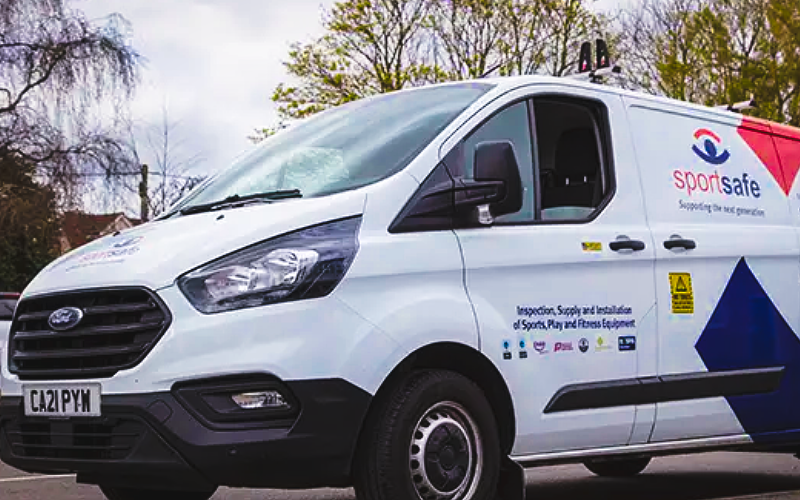
Sportsafe UK logo — UK market leader in sports and leisure equipment maintenance.
ABEO group logo — Euronext Paris-listed European sports equipment manufacturer.

Overview of Sportsafe UK

Founded by Jon Neill in 1997 from a garden shed in Colchester with a single council contract, Sportsafe UK grew over two decades into the country's market leader for installing, repairing and maintaining sports, play and fitness equipment in schools, leisure centres and businesses.

At the point of sale, Sportsafe held an estimated 40 per cent share of the UK market and employed 110 people across a national field-engineering network. The business combined recurring inspection and maintenance contracts with new-installation work — a defensible, contract-led model that consistently attracts trade and private equity interest in UK lower mid-market M&A.

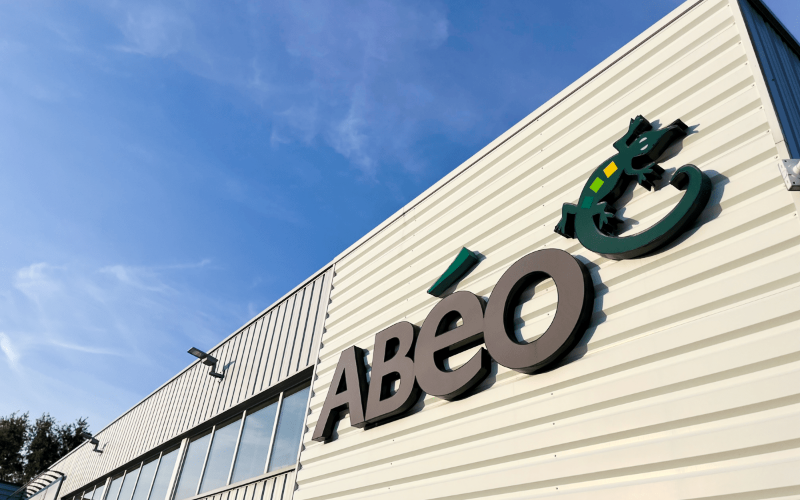
ABEO headquarters in eastern France, Euronext Paris-listed European sports equipment market leader.

Strategic acquisition by ABEO

Headquartered in eastern France and listed on Euronext Paris, ABEO is a pan-European leader in the design, manufacture and distribution of equipment for sports and leisure centres — including gym apparatus, landing mats, PE equipment, climbing walls and changing-room fittings.

In its 2017 financial year ABEO posted revenue of €167m, with around 75 per cent generated outside France and 1,200 people employed across the group.

The UK was already ABEO's second-largest sales territory, but its UK footprint was skewed toward the commercial gym market.

Acquiring Sportsafe gave ABEO immediate national reach into schools and leisure centres, an installed base of recurring service contracts, and a route to consolidate a fragmented UK service market — extending a buy-and-build strategy that had already added comparable businesses in Belgium and the Netherlands.

How the deal came together 


The market backdrop

UK sports and leisure equipment services was a fragmented market built on long-cycle inspection, repair and replacement contracts with public-sector and education buyers.

European trade consolidators — ABEO among them — were actively building cross-border platforms, and UK lower mid-market M&A activity in contract-led B2B services was running well above its long-run average.

For a founder-led business with 40 per cent share and a national field operation, the timing for a competitive sale process was unusually favourable.


Finding the right acquirer

Sportsafe's earlier work with a business coach meant the company arrived at the process operationally and financially well-prepared. James Pugh ran a structured approach to a curated buyer universe spanning UK and European trade acquirers and private equity.

Inbound interest from private equity was strong, but James and Jon took the view early in the process that a strategic trade buyer with an established international footprint would deliver a materially better outcome — both in headline value and in the platform it would give Sportsafe and its team after completion.

Running a process that protected value

The process was structured to maintain competitive tension throughout. Private equity bidders were kept warm to defend the valuation narrative while negotiations with ABEO progressed.

Sportsafe's recurring contract base and market-share position were defended on operational evidence rather than EBITDA alone — the analysis acquirers in this sector use when underwriting contract retention and field productivity.

Confidentiality was tightly managed across customers, employees and a national engineering workforce.

Completing on the right terms

The transaction completed as the sale of 80 per cent of the equity to ABEO, with Jon Neill retaining a 20 per cent stake to participate in the next phase of growth under new ownership — a structure that illustrates how founders can secure both certainty at completion and a second payout when the business grows inside a strategic group.

Continuity for the Sportsafe team and customer base was a stated deal objective and was reflected in the completion terms.

Enhancing the ABEO service ecosystem

Sportsafe gave ABEO an immediate UK national service platform, an installed base of contracted inspection and maintenance work, and a route into the schools and leisure-centre segments where ABEO had previously been under-represented. It also created the operational template — direct national field engineering, recurring service revenue, and structured safety-inspection contracts — that ABEO could apply across other European markets.

Sportsafe UK and ABEO completed transaction — 110 employees, 40 per cent UK market share.

Deal stats

1200
ABEO employees
110
Sportsafe employees
167m
ABEO revenue in 2017
7.1 %
of ABEO revenue growth came from acquisitions
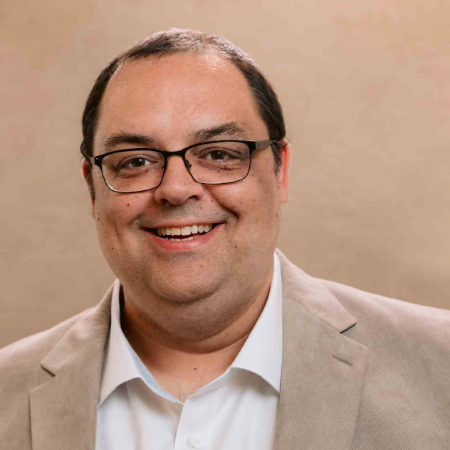
James Pugh, later Partner at CapEQ, who advised Sportsafe UK shareholders on the sale to ABEO

M&A advisory support

James Pugh led the engagement personally from first conversation through to completion, supported by HCR Law in Worcester on the sell-side legal mandate.

"While we generated strong interest from private equity, it was clear early on that a larger industry player with an established footprint outside the UK would be the best fit for both parties."

James Pugh — now Partner, CapEQ


“I first met James when in 2017 when he acted as the deal leader for the sale of my business.

James has an ability to remain calm under pressure, stay focused when the going gets tough, and be strong enough to stick to his guns to get the results for his clients. He is good fun to work with and I would not want to have gone through a business sale with anyone else.

At all times it felt like we were in control and he could calm a tense situation putting his clients needs first.”

Jonathan Neill, co-founder

Sportsafe UK

About Sportsafe UK

Sportsafe UK is the country's market-leading specialist in the installation, repair and maintenance of sports, play and fitness equipment.

Founded in Colchester in 1997, the business serves schools, leisure centres, local authorities and commercial gyms across a national field-engineering footprint.

At the point of sale it held an estimated 40 per cent share of the UK market and employed 110 people.

About ABEO

ABEO is a European market leader in the design, manufacture and distribution of sports and leisure equipment, headquartered in eastern France and listed on Euronext Paris.

The group's portfolio covers gymnastics apparatus, landing mats, PE equipment, climbing walls and changing-room fittings, with revenue of €167m in its 2017 financial year and around 1,200 employees.

Approximately 75 per cent of group revenue is generated outside France.

Frequently asked questions

Selling a UK sports equipment, inspection or contract-led services business — what founders, acquirers and investors most often ask.

What acquirers value in this sector

Acquirers value the recurring, contract-led revenue base — inspection, servicing and replacement work driven by statutory and insurance-led safety regimes — which produces predictable cash flow and high customer retention. Field-engineering scale matters too: a national service footprint is expensive to build organically, so consolidators consistently pay a premium for installed national coverage. For trade buyers running cross-border sports and leisure platforms, a UK acquisition with strong share in schools and leisure centres delivers immediate market access and the operational template to roll out comparable services in adjacent territories.

Headline valuations are typically anchored to a multiple of maintainable EBITDA, but sophisticated trade buyers look behind that figure at contract retention rates, average contract length, customer concentration, engineer productivity, and the quality of the order book. Businesses with multi-year service contracts and low churn defend higher multiples than project-led peers. A credible sell-side adviser will build the valuation narrative on operational evidence — not headline EBITDA alone — so the value can be defended at heads of terms and through due diligence without surprises.

International acquirers value defensible market share in a high-trust segment, a known regulatory and insurance environment, and an operational template they can apply elsewhere. The UK lower mid-market is well-supplied with founder-led businesses at the scale international groups can absorb without complexity, and English-language reporting makes diligence efficient. For European trade buyers, a UK acquisition often plugs a known gap in cross-border coverage and accelerates a buy-and-build strategy that is already established on the Continent.

Private equity interest is a useful source of competitive tension even when a trade buyer is the preferred outcome. A well-run process keeps credible PE bidders engaged in parallel with trade discussions, which protects pricing and disciplines the timeline. The right adviser will be honest about which bidder type best fits the founder's objectives — value, certainty, team continuity and post-deal involvement — and structure the process so that the chosen route is reached on the founder's terms rather than the highest bidder's.

Medium and longer-term founder challenges

Confidentiality is managed through a tightly controlled buyer universe, staged information release, and named-bidder NDAs before any commercially sensitive material is shared. In contract-led businesses with a field workforce, customer and engineer continuity is a stated deal objective from day one — not something negotiated at the last minute. A founder-led process will typically involve only a small inner team during the early stages, with broader internal communication carefully sequenced around exclusivity and announcement.

A partial sale — typically 60 to 80 per cent — lets a founder bank certainty at completion while retaining exposure to growth under new ownership. It can be the right answer for founders who believe the business has materially more value to create with the right strategic partner, and who want to stay involved through the next chapter. The trade-off is that the retained equity is illiquid until the next exit event, so the structure of any minority position — including drag, tag and exit mechanics — needs to be negotiated as carefully as the headline price.

From kick-off to completion, a well-prepared UK lower mid-market process generally takes six to nine months. Preparation — getting the business presentation-ready, cleaning up financial reporting and resolving any pre-sale issues — adds another three to six months if not done in advance. Founders who engage an adviser 18 to 36 months ahead of a target exit window consistently see better outcomes than those who go to market reactively, which is why CapEQ's Three-Year Exit Roadmap exists.

Look for evidence of completed transactions in contract-led B2B services, partner-led engagement (not junior handoff after the pitch), and demonstrable buyer-side relationships with both trade consolidators and private equity. Independence matters — advisers without conflicting audit, tax or recurring service-line relationships with the same clients can act purely in the founder's interest. CapEQ is Europe's first Certified B Corporation M&A boutique, which formalises a client-first operating model: an adviser who will tell a founder not to sell when the timing or terms are wrong.

We'd love to hear your story

If you are a founder thinking about selling your business we would be glad to have an early, confidential conversation.

There is no pressure and no obligation: just an honest view on what to focus on to get you and your business exit-ready.