EPIC POB acquired by Marine Guard 

In 2022, Southampton-based superyacht security specialist Marine Guard acquired Aberdeen offshore safety software business Exploration & Production Information Company (EPIC) in a sell-side mid-market M&A deal advised by CapEQ, supported by a bespoke five-year debt facility from SME Capital. 

EPIC offshore safety software logo — acquired by Marine Guard in 2022
Marine Guard superyacht security logo — acquirer of Aberdeen-based EPIC
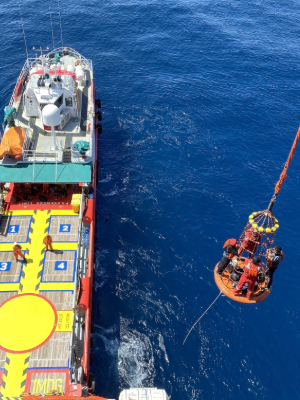
Smart-Trac personnel-on-board software screen used on a North Sea offshore installation

Deal at a glance

Target Exploration & Production Information Company Limited (EPIC)
Acquirer Marine Guard Group Limited
Completion year 2022
Deal value Undisclosed
Deal structure Cash consideration funded by a bespoke five-year SME Capital debt facility, alongside refinanced group commitments
Sell-side M&A advisor CapEQ — Partner Mark Sapsford
Legal advisor to EPIC Vialex — Andy Lowe and Scott Paterson
Buy-side corporate finance advisor Prism Corporate Broking — Peter Watson
Legal advisor to Marine Guard BDB Pitmans — Duncan Walker and Ross Fletcher
Debt advisor RSM UK Debt Advisory
Sector Offshore safety software / industrial SaaS
Target HQ Aberdeen, United Kingdom
EPIC headcount at close 20

Overview

Marine Guard is the global market-leading security systems partner for the world's largest private superyachts. In 2022, founder Richard Webb and CFO Emma Hills completed a strategic review designed to diversify the group's customer base beyond luxury maritime, and identified Aberdeen-based EPIC as the right acquisition target.

EPIC is the developer of Smart-Trac, mission-critical Personnel-on-Board (POB) software used to track personnel movements offshore, control access to hazardous zones, and coordinate e-mustering in the event of an evacuation. Smart-Trac is deployed by oil and gas majors including Total, Petronas, and Occidental, and is also used in safety-critical environments such as ports.

CapEQ acted as sell-side M&A advisor to EPIC's sole shareholder. Partner Mark Sapsford led the engagement. Legal advice to EPIC was provided by Vialex, led by Andy Lowe and Scott Paterson. Marine Guard was supported by Prism Corporate Broking (Peter Watson), BDB Pitmans (Duncan Walker, Ross Fletcher), and RSM UK Debt Advisory on the SME Capital facility.

CapEQ Partner Mark Sapsford advising EPIC founder Ian Traquair on the sale to Marine Guard

About EPIC

EPIC is a UK-based offshore safety software business headquartered in Aberdeen. The company was founded by Ian Traquair, who began developing the platform in the aftermath of the 1988 Piper Alpha disaster — the worst offshore oil and gas accident in history — with a single guiding purpose: to make sure operators always know where every person is on a hazardous installation, and to bring everyone home safely.

Over more than four decades, that mission produced Smart-Trac, a category-defining POB and e-mustering platform now used across the North Sea, the Gulf, South-East Asia, and other safety-critical environments worldwide. Customers include Total, Petronas, and Occidental.

About Marine Guard

Marine Guard is a Southampton-headquartered security technology group serving the largest private superyachts globally. Founded by Richard Webb, the group had already begun organic diversification in 2017 with the launch of CrewPass, a SaaS platform for vetting maritime crew. The 2022 acquisition of EPIC was the group's first inorganic step into the wider offshore safety market, broadening Marine Guard's footprint into oil and gas, ports, and other hazardous-environment sectors.

Following completion, the parent group was reorganised into three business units — Marine Guard, CrewPass, and EPIC — employing 54 people in total.

How the deal came together 

The starting point: a founder's succession decision

At 73, Ian Traquair was clear about what he wanted from a sale, and equally clear about what he was not willing to compromise. After 46 years in the offshore industry, his priority was finding a home where Smart-Trac would continue to protect the men and women who work in hazardous environments — in perpetuity. A purely financial exit, with the platform's mission left to chance, was never on the table.

Ian's decision to sell was personal rather than driven by external pressure. CapEQ's first task was to listen, understand the legacy he wanted to secure, and translate that into a buyer brief that prioritised cultural fit and operational continuity alongside price.

A strategic fit from an unexpected direction

Marine Guard's leadership team had completed a strategic review pointing to one clear conclusion: the group needed to diversify beyond superyacht security. Richard Webb and Emma Hills mapped adjacent markets where Marine Guard's core capability — securing people and assets in hostile, mobile, and high-consequence environments — could transfer.

EPIC stood out. The end markets looked nothing alike on the surface — billionaire-owned vessels in the Mediterranean against drilling rigs in the North Sea — but the underlying product DNA was strikingly similar: identity, access, location, and emergency response, executed to a standard that allows zero margin for error.

From informal talks to a formal mandate

EPIC and Marine Guard entered informal discussions directly. Once it was clear the conversation had real weight, Ian appointed CapEQ Partner Mark Sapsford to take the process forward. Mark's brief was deliberately broad: prepare EPIC for sale, run a parallel research workstream on alternative acquirers in case the Marine Guard talks stalled, and lead the negotiation on price, terms, and payment structure so Ian could step away at completion.

That fallback plan was never just a formality. A credible alternative process protects the seller's leverage at every stage and gives the founder the confidence to hold the line on the points that matter — in Ian's case, the long-term home for Smart-Trac and the team behind it.

Aligning two markets: superyachts meet offshore energy

The more time the two leadership teams spent together, the clearer the fit became. Richard Webb summarised it at the time: the core product similarities were remarkable despite the differences in end application, and the more they talked, the more evident it became that the businesses could benefit one another.

For Marine Guard, EPIC unlocked entry into oil and gas, ports, and other industrial safety-critical sectors. For EPIC, Marine Guard offered the operational scale, financial backing, and group infrastructure to push Smart-Trac further internationally — without losing the focus that made it work in the first place.

Negotiation and deal structure

Marine Guard needed a defined, committed acquisition target before SME Capital would release the bespoke five-year debt facility underwriting the transaction. That structural reality shaped the rhythm of negotiations: several working sessions were given over to helping the buy-side team understand the nuances of EPIC's customer base — the renewal cycles of oil and gas majors, the long sales cycles into operators, and the management succession plan post-Ian.

CapEQ negotiated price, payment structure, and the conditions of Ian's exit so that completion meant a clean handover for the founder, with no lingering obligations that would compromise his ability to step away. The final consideration was supported by a five-year SME Capital debt facility, which also refinanced other group commitments at the parent level.

Due diligence

Due diligence was rigorous, reflecting the safety-critical and regulated nature of EPIC's end markets. Key workstreams included:

  • Customer concentration and contract analysis across blue-chip oil and gas majors
  • Technology review of the Smart-Trac platform and its compliance posture
  • Management succession planning, including post-completion roles for senior operators
  • Tax structuring and intellectual property assurance
  • Lender diligence supporting the SME Capital debt facility

Several months of structured engagement between the two teams preceded signing.

What they said

Marine Guard CEO Richard Webb said:

"It was remarkable to see the core product similarities despite the differences in end application. The more we talked, the more evident it became that the two businesses could benefit one another."

 "After 46 years in the offshore industry, it's been a privilege to work with so many talented people dedicated to looking after offshore personnel who work in difficult and often hostile environments. The combined talents and experience of EPIC and Marine Guard staff will provide a solid base for growth meeting current and future challenges." 

Ian Traquair, EPIC POB founding Managing Director

Deal numbers


17%
EPIC revenue growth in the first full year under new ownership
20
NE Scotland jobs safeguarded by the transaction
54
Combined headcount across Marine Guard, CrewPass, and EPIC post-deal
2
Oil and gas majors rolling out Smart-Trac across global offshore sites post-completion
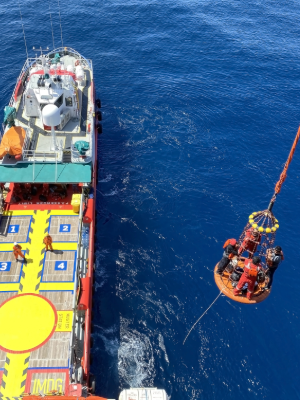
Smart-Trac personnel-on-board software screen used on a North Sea offshore installation

Advisor team

Sell-side M&A advisor: CapEQ — led by Partner Mark Sapsford.

Legal advisor to EPIC: Vialex — Andy Lowe, supported by Scott Paterson.

Buy-side corporate finance advisor: Prism Corporate Broking — Peter Watson.

Legal advisor to Marine Guard: BDB Pitmans — Duncan Walker and Ross Fletcher.

Debt advisor: RSM UK Debt Advisory — Gregory Moreton, Jack Williams, Michelle Harris, and Omar Kader.

About CapEQ

CapEQ is a UK-based mid-market M&A advisory firm and Certified B Corporation, advising founders and shareholders on selling, acquiring, and growing mid-market businesses. The firm's partner-led approach combines authoritative deal expertise with the emotional intelligence — the EQ Difference — that founder-led exits require.

Partner Mark Sapsford, who led the EPIC transaction, specialises in industrial software and safety-critical sector exits across the UK, with particular depth in the energy supply chain.

From founder to freedom - Ian Traquair's business sale journey

Fromer EPIC POB founder Ian Traquair speaks candidly with CapEQ about multiple aspects of the business sale - from the decision to exit through to life after the deal.

A must-watch for founders and entrepreneurs seeking tips on timing, transitioning, and finding purpose beyond business.


Frequently asked questions

What do acquirers value most in an offshore safety software business?

Acquirers consistently reward four things: blue-chip customer concentration with majors like Total, Petronas, or Occidental; high-renewal recurring revenue under multi-year contracts; embedded mission-critical workflows that are costly and risky to replace; and clear regulatory and compliance positioning in a safety-critical sector. EPIC ticked all four, which materially supported the valuation conversation.

Why is recurring revenue from oil and gas majors attractive to acquirers in UK M&A?

Recurring revenue from supermajors is highly defensible. Operators rarely change safety-critical software because the operational disruption and re-certification burden are significant. For a UK mid-market M&A acquirer, that translates into predictable cash flow, lower customer-churn risk, and a stable base from which to underwrite acquisition financing — exactly what SME Capital needed to support Marine Guard's debt facility.

What kind of multiples does mission-critical safety SaaS typically attract in UK mid-market M&A?

Mission-critical industrial SaaS — particularly in safety, compliance, and asset integrity — typically commands a premium to generalist B2B software, because switching costs are high and replacement risk is low. The actual multiple depends on customer concentration, contract length, recurring revenue mix, and the regulatory tailwind in the end market. Specific outcomes are deal-dependent and best discussed directly with an advisor.

How does a diversified blue-chip customer base affect acquisition value?

A diversified blue-chip base reduces the single-customer-loss risk that depresses valuations of otherwise strong businesses. For acquirers, it also signals that the product has been tested against the most demanding procurement and security standards in the world. EPIC's customer mix across multiple oil and gas majors — and adjacent verticals such as ports — directly supported its appeal to Marine Guard.

What are the main challenges for Aberdeen-based founders considering an exit?

Aberdeen-based founders face a relatively concentrated local advisory market and a buyer pool that is heavily weighted towards energy-sector trade buyers. Working with a UK-wide mid-market M&A advisor opens up acquirers in adjacent sectors — defence, ports, marine, industrial software — who often value the same capabilities for different reasons, as Marine Guard did with EPIC.

How does the UK energy transition affect long-term valuations for North Sea suppliers?

The energy transition is a real factor in due diligence for any North Sea supplier. The strongest valuations go to businesses whose capability is sector-agnostic — safety, compliance, asset integrity, and connectivity all transfer naturally into offshore wind, hydrogen, and carbon capture. EPIC's Smart-Trac platform was already being used in non-oil-and-gas environments, which de-risked the transition narrative for Marine Guard's lender.

What succession options exist for sole-shareholder founders in remote Scottish business hubs?

Sole-shareholder founders typically weigh four routes: management buyout, sale to a strategic trade acquirer, sale to private equity, or continued independent ownership with a management succession plan. The right answer depends on the founder's personal goals, the readiness of internal management, and the strategic appetite in the buyer market. A partner-led advisor can map all four with the founder before a process starts.

How does sector concentration in oil and gas affect mid-term resilience for SaaS founders?

Heavy sector concentration is a double-edged sword. In stable cycles it produces strong recurring revenue and high gross margins; in downturns it can compress renewal pricing and slow new sales. The mid-term play for founders is usually deliberate diversification into adjacent safety-critical sectors before an exit — exactly what EPIC had begun to do, and what made the Marine Guard fit so coherent.

We'd love to hear your story

Let's chat about your future plans. We can help you get clear on where your business journey is going.